
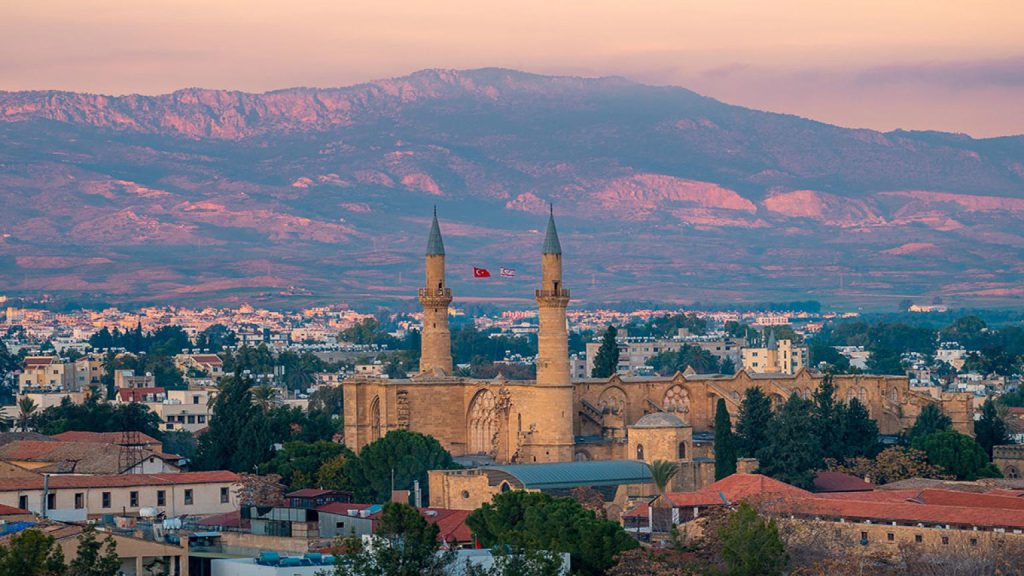
Nicosia isn’t a destination you stumble upon by accident. In February 2026, European Best Destinations released its annual ranking, based on over 1.3 million votes from travellers in 154 countries. Nicosia landed in 2nd place among Europe’s Best Destinations for 2026, with 109,214 international votes, right behind Madrid. On top of that, a month earlier, it had separately been named Europe’s Best Cultural Destination 2026, ahead of cities like Florence and Kraków.
A double recognition, and it’s no accident. Nicosia is Europe’s last divided capital: a UN-patrolled Green Line has split it in two since 1974. Since 2008, though, visitors have been able to cross on foot between the Greek Cypriot and Turkish Cypriot sides via Ledra Street. Few cities in Europe offer an experience quite this singular. This sustainable travel guide to Nicosia 2026 helps you explore it with context, curiosity and a lighter footprint.
Why 2026 is a great year to visit Nicosia
European Best Destinations describes Nicosia as a city where “heritage and contemporary creativity coexist effortlessly.” That’s not an exaggeration. Continuously inhabited since 3000 BC, Nicosia is compact and easy to explore on foot. On top of that, 2026 brings an especially active cultural calendar: the Faneromeni Arts Festival in summer, the Cyprus International Film Festival, and several Christmas village pop-ups that fill the historic centre.
If Cyprus has been on your radar, this is the moment. And if you want to plan the trip properly, our complete Cyprus travel guide is a great place to start for certified sustainable hotels, cultural routes and local experiences.
What to see in Nicosia: walls, borders and streets full of history
The Venetian walls and the old town
The Venetian walls of Nicosia, built in the 16th century, encircle the entire historic centre with eleven star-shaped bastions. One note, though: they are not UNESCO World Heritage, despite what some blogs claim. Even so, they remain among the best-preserved Renaissance fortifications in the Eastern Mediterranean. Inside the walls, the Selimiye Mosque — a former Gothic cathedral dedicated to Saint Sophia — is visible from both sides of the city and sums up Nicosia’s layered history perfectly.
Crossing Ledra Street: the city’s most symbolic experience
Since April 2008, visitors have been able to cross on foot between the Greek Cypriot and Turkish Cypriot sides of Nicosia through the Ledra Street pedestrian crossing. The crossing is usually quick, but you should always carry your passport or valid identity document and check current requirements before travelling. It is one of the most singular experiences you can have in a European capital.
Streets with awnings, colourful balconies and everyday life
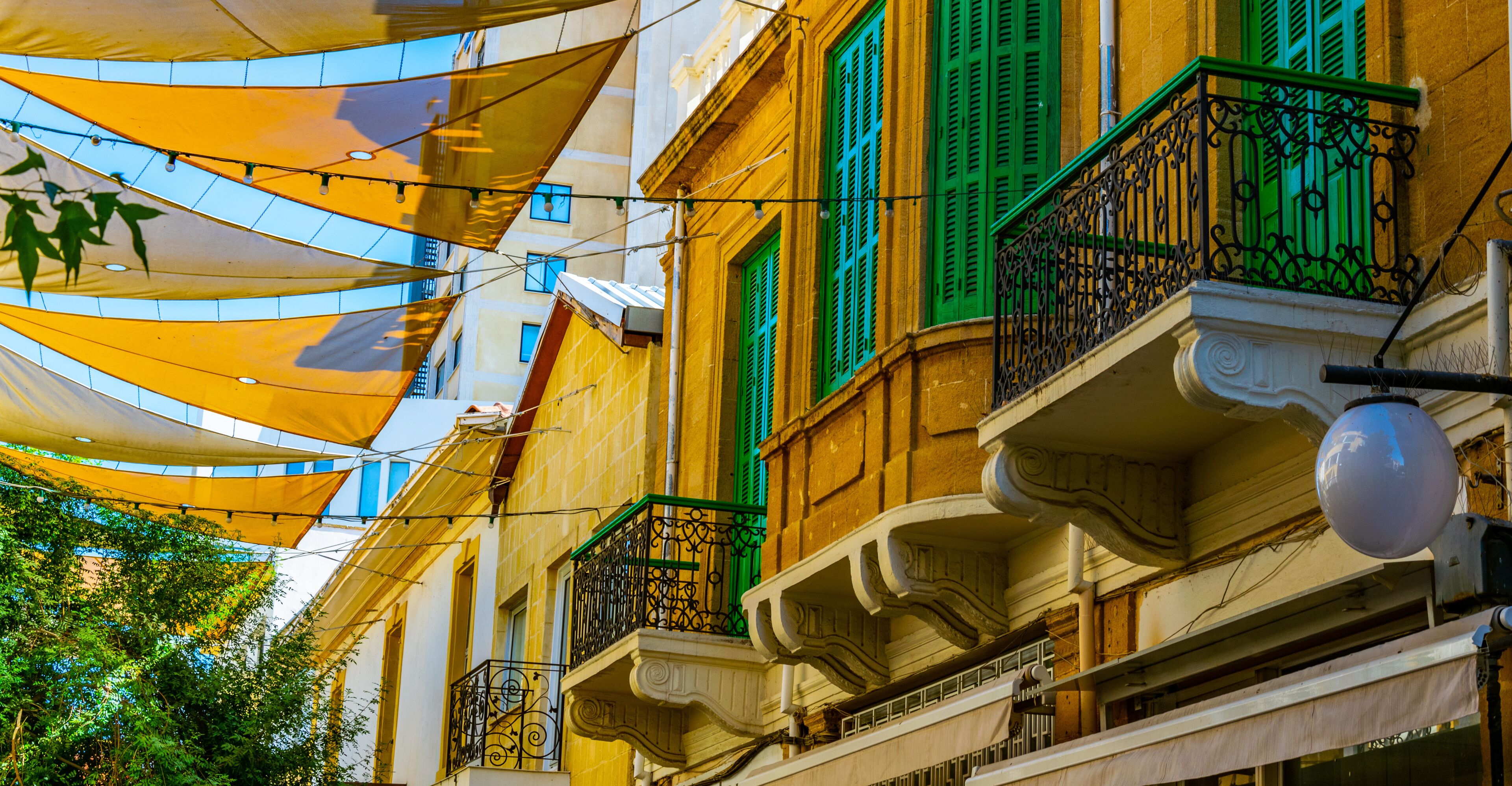
Away from the main monuments, Nicosia’s real charm lives in the narrow streets of the old town. Fabric awnings shield the summer sun, and colourful balconies lean out over stone façades. This is where the city’s everyday rhythm comes through best, far from any organised tourist circuit.
Food in Nicosia: local, seasonal and rooted in tradition
The Michelin Guide doesn’t cover Cyprus yet, so you won’t find any stars here. What you will find is a distinct food identity, gathered under the “Taste Nicosia” label: family-run tavernas, shared mezze, and seasonal produce.
The star ingredient is halloumi, which has held Protected Designation of Origin status from the EU since 2021. Within the EU framework, the name Χαλλούμι / Halloumi / Hellim is protected against imitation and misuse, helping safeguard both the traditional recipe and local producers.

For local produce, don’t miss the Bandabulya Municipal Market (also known as AGORA). The building, a 1960s modernist landmark next to the UN buffer zone, has recently been restored with European and Cypriot funding. The project won a Europa Nostra Award for its heritage value and for fostering cooperation between the city’s two communities.
Getting around Nicosia sustainably
Let’s be honest here. Nicosia is still a car-dependent city. That said, it is investing in cleaner and more sustainable ways to move around, especially in and around the historic centre.
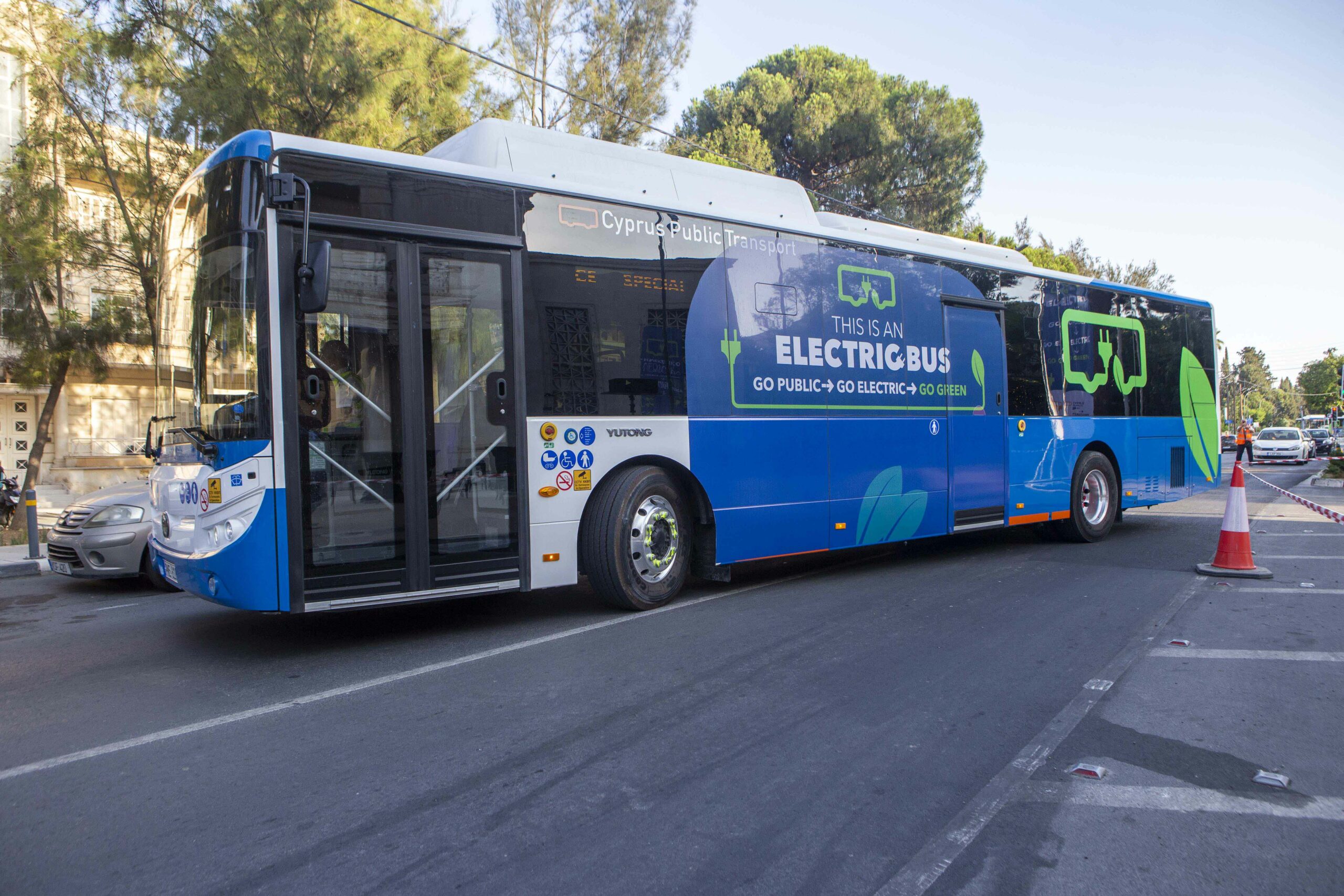
- Electric buses: Cyprus Public Transport has introduced fully electric buses, with Nicosia among the cities benefiting from cleaner public transport.
- Nextbike: the public bike-share system has stations in Nicosia, with cycling infrastructure gradually improving around the city.
- On foot, the best option: the old town, within the walls, is entirely walkable. In fact, it is the most practical — and most sustainable — way to see it.
Where to stay in Nicosia: choose your area
- Inside the Walled City: the most practical option, and the most charming. Boutique hotels like Amyth of Nicosia, a Design Hotels member, sit just steps from the main landmarks.
- Around Ledra Street: a lively commercial area and a good base for crossing to the northern side without needing transport.
- Engomi: a quieter, more residential area, a short drive or bus ride from the historic centre.
At this world to book you’ll find a curated selection of certified sustainable hotels in Cyprus so your stay matches the rest of your trip.
Before you travel to Nicosia: 5 things that make a real difference
- Best time to visit: spring (April–May) and autumn (September–October). Mild temperatures, without the peak summer heat.
- Crossing to the northern side: always carry your passport or valid identity document. Conditions can change, so check the latest travel guidance before you go.
- Airports: Nicosia has no functioning airport of its own. Fly into Larnaca or Paphos, both under an hour away by car.
- Comfortable shoes: the old town’s streets are stone, and some stretches are unevenly cobbled.
- Cash for the northern side: if you cross into the northern side, it is worth carrying some Turkish lira or euros in cash, since not every business accepts cards.
Nicosia isn’t explained. It’s crossed
European Best Destinations sums it up well: “by uniting history and innovation, creativity and participation, tradition and bold cultural programming, Nicosia stands as one of Europe’s most distinctive cultural destinations today.” They’re right. Few cities on the continent offer such a direct experience of what it means to live alongside recent history without letting it define everything.
Over 109,000 travellers voted for it this year. The only question left is when you’re crossing over.
Ready to experience Nicosia with a positive impact?
At this world to book you’ll find certified sustainable hotels and personalised guidance so every night in Cyprus also counts for something.
Published in Destinations · This World To Book — Certified sustainable travel agency · Travel good. Do good.