
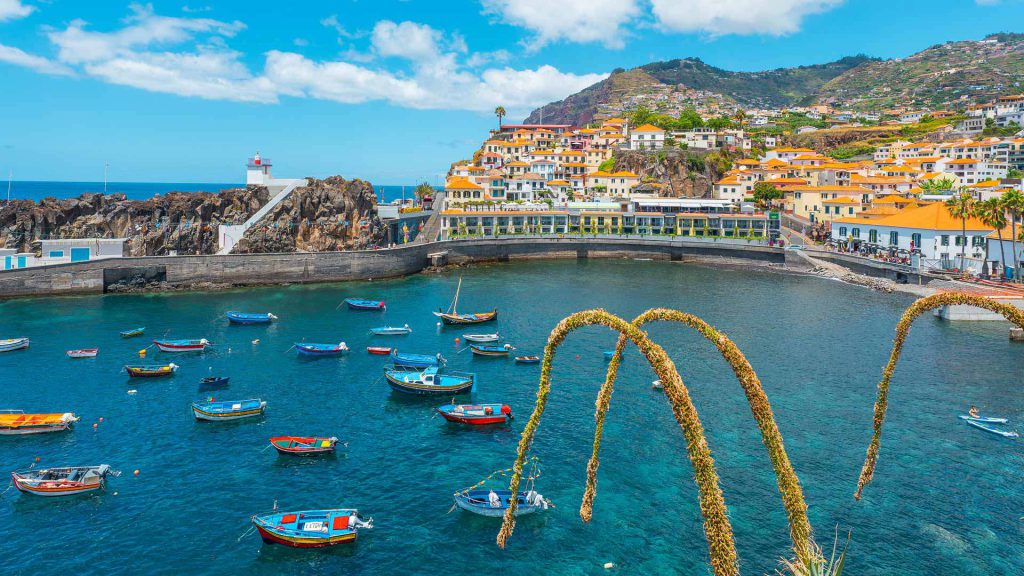
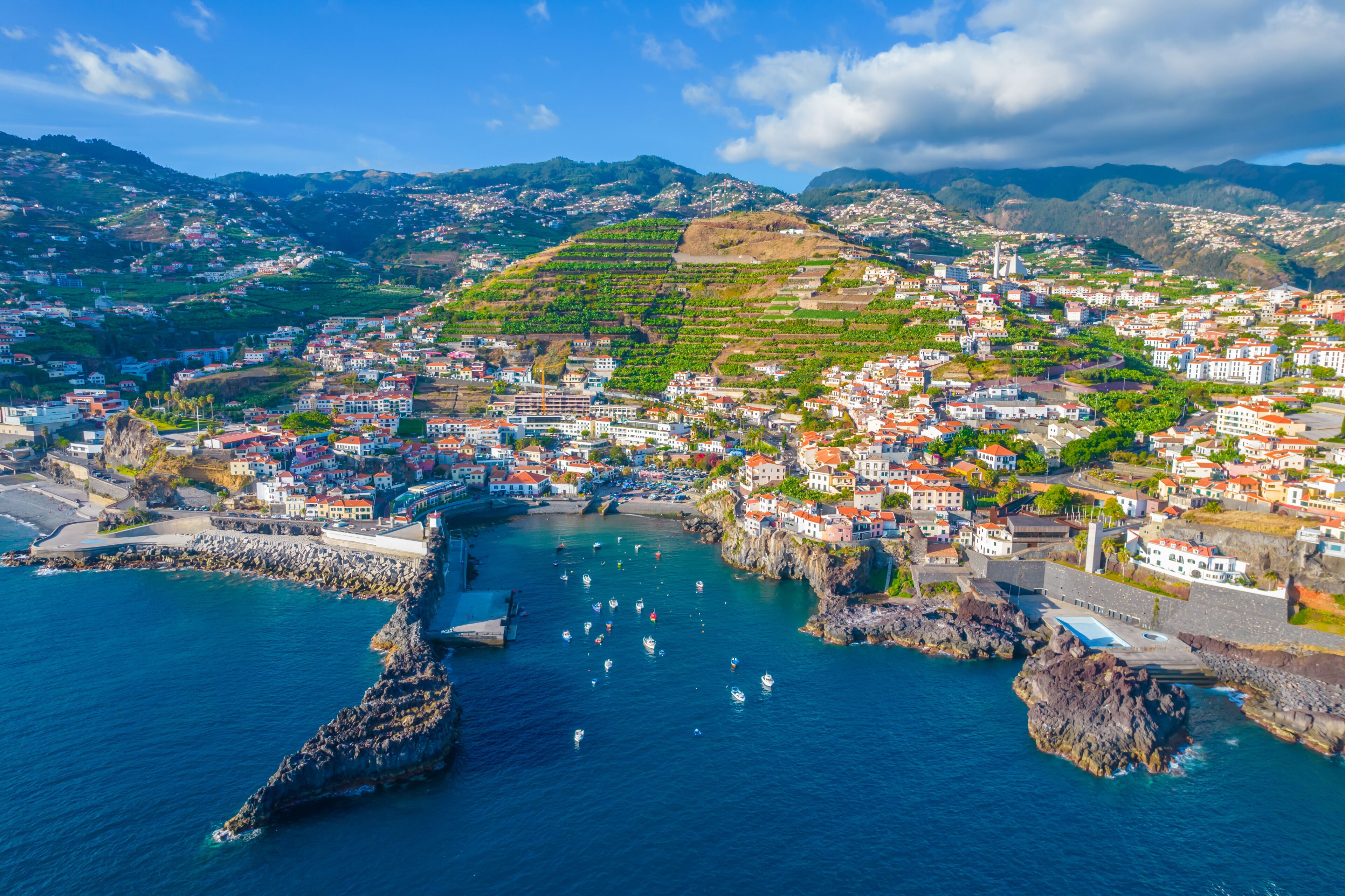
There’s a village on Madeira’s south coast where fishermen still head out at night for black scabbard fish, where colourful boats called xavelhas rest on a grey pebble beach, and where Winston Churchill once sat down to paint a bay that has barely changed since. In February 2026, European Best Destinations named Câmara de Lobos the 6th Best European Destination of the year, in a ranking voted on by over 1.3 million travellers from 154 countries. It’s the first Portuguese destination on the list — ahead of Lisbon itself.
Why 2026 is the moment for Câmara de Lobos
European Best Destinations describes the town through sunny terraces, bougainvillea-covered lanes and ocean views at every corner. That’s not tourist-brochure exaggeration: Câmara de Lobos has been, first and foremost, a working fishing village for centuries, and it’s precisely that unpolished, lived-in character that has landed it among Europe’s 20 most-voted destinations this year — ahead of capitals like Lisbon (9th) and entire regions like the Costa Vicentina (12th).
It was also the first place on the island to be settled after its discovery: navigator João Gonçalves Zarco based himself here between 1420 and 1424. The name — “chamber of the wolves” — doesn’t refer to land wolves at all, but to the monk seals (“sea wolves”) that once filled the cove when Zarco arrived.
Planning to explore more of the island afterwards? At this world to book you’ll find certified accommodation across Madeira.
What to see in Câmara de Lobos
The fishermen’s chapel and Churchill’s viewpoint
The Nossa Senhora da Conceição chapel, founded in the 15th century, is the town’s spiritual centre, its interior decorated with scenes from the life of Saint Anthony and his sea-related miracles. A short walk away, at what’s now known as Churchill’s viewpoint (Miradouro do Espírito Santo), the British statesman used to set up his easel during his stays in Madeira. It was in January 1950 that he painted the exact scene that, more than seventy years on, still looks remarkably similar.
The seafront promenade: 2.2 km walking above the Atlantic
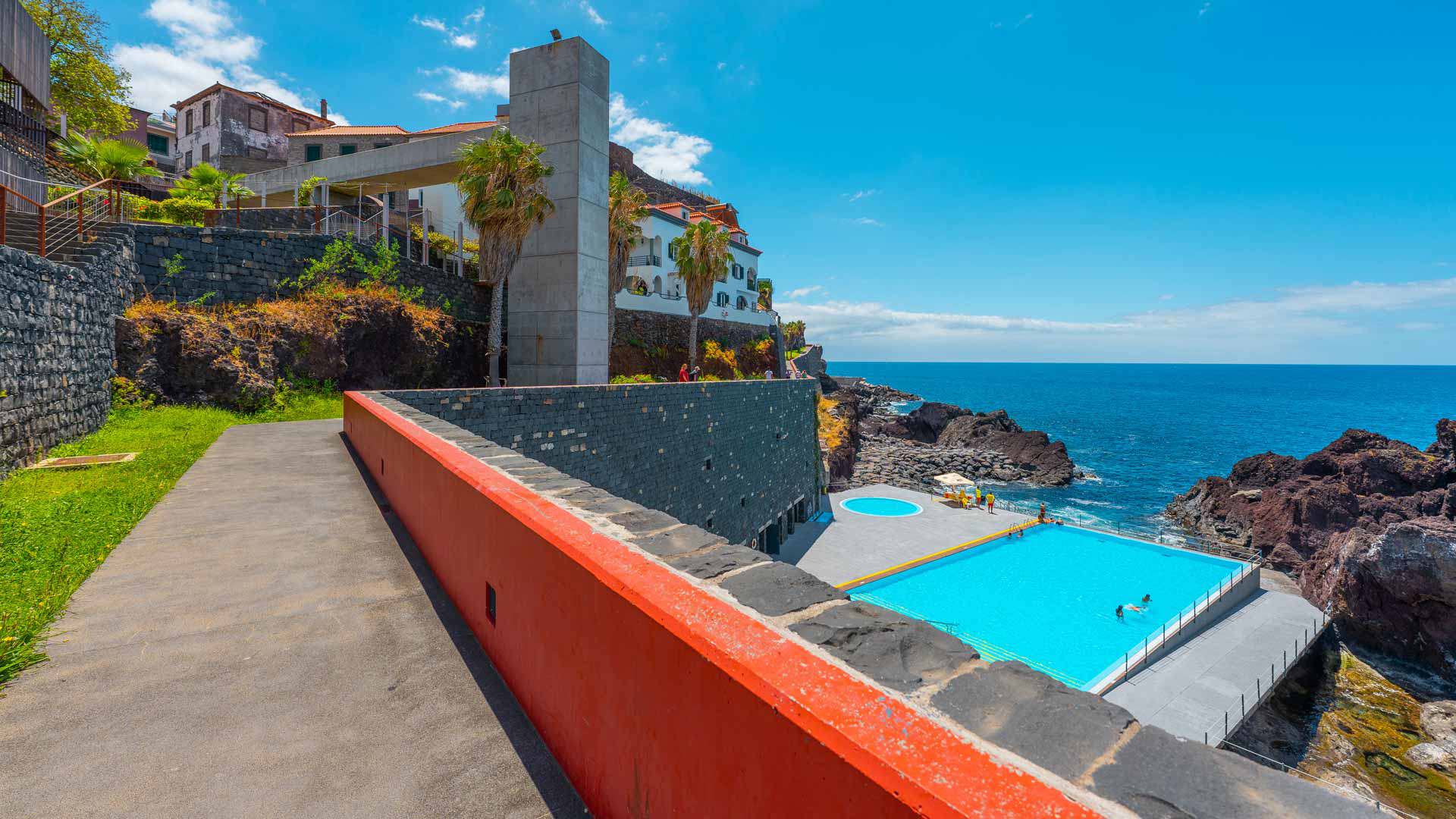
One of the island’s best free activities is walking the Câmara de Lobos promenade, a 2.2 km pedestrian route connecting Funchal’s Lido area to the town’s bay. Much of it runs on pillars, deliberately designed to lessen the impact on the surrounding cliffs while keeping the landscape close to intact. It’s free, accessible, and arguably the best moving viewpoint on Madeira’s south coast.
Cabo Girão: Europe’s highest sea cliff
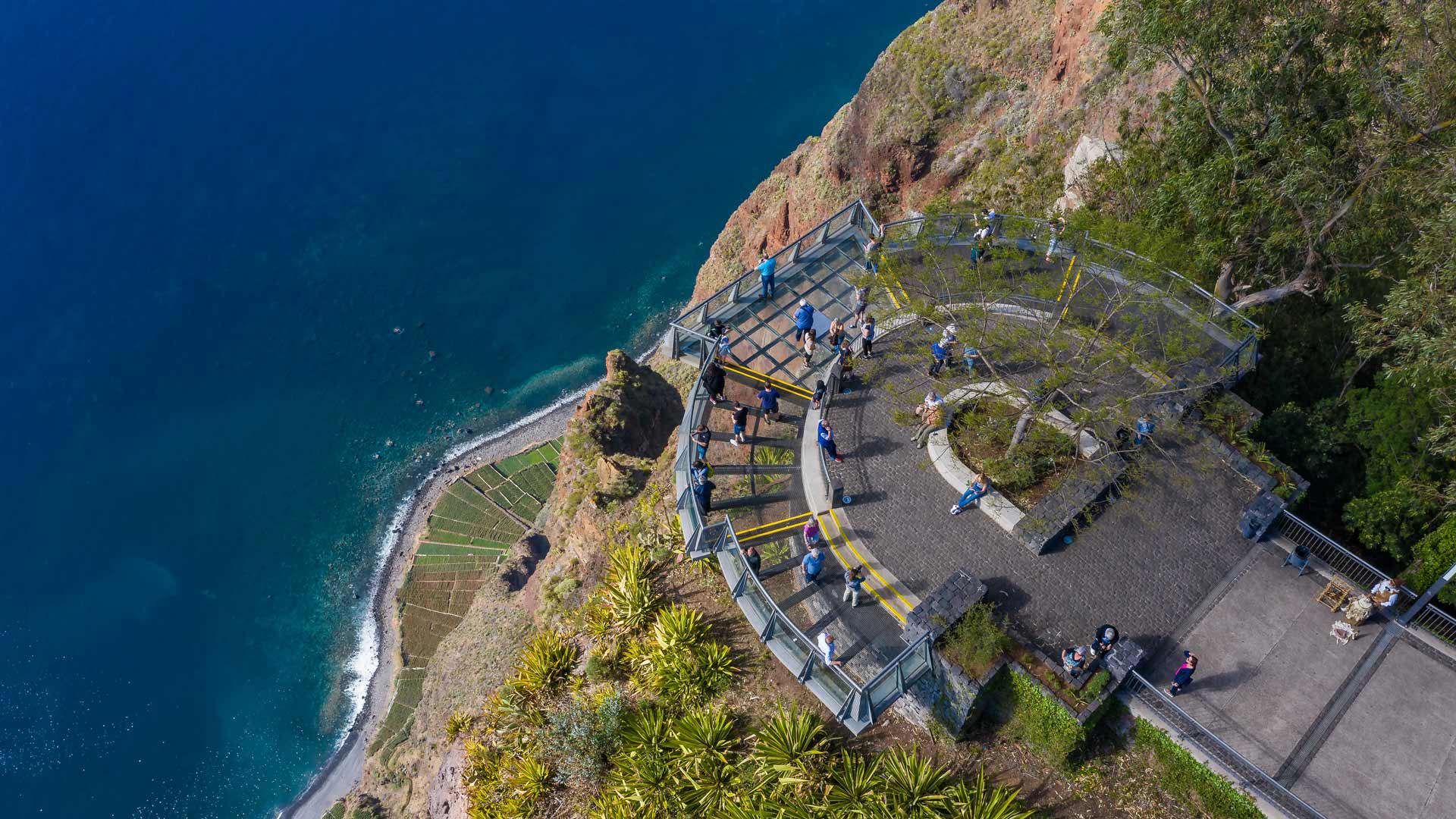
A couple of kilometres from the village stands Cabo Girão, widely considered Europe’s highest sea cliff at around 580 metres. Its glass-floored skywalk (entry: €2, free for residents and children under 12) juts straight out over the drop. Below, on the tiny cultivated fajãs at the cliff’s base, a cable car — the Teleférico do Rancho — now ferries the farmers who still work those impossible terraces, which were only reachable by boat until 2003.
Estreito de Câmara de Lobos: vineyards and the island’s biggest mural
Heading uphill from the village, Estreito de Câmara de Lobos is one of Madeira’s two major wine-growing areas, alongside São Vicente. This is where the Tinta Negra grape thrives — the variety behind roughly 85% of all Madeira wine production — alongside some Boal. Winery Henriques & Henriques, founded in 1850 and based right here in the Estreito, is one of Madeira’s historic wine houses. Every September, the Festa das Vindimas (grape harvest festival) fills the village with traditional grape-treading, folk music and parades. While you’re there, look out for Architects of Equilibrium, the largest street mural on the island.
Food: so much more than a stopover snack
Câmara de Lobos is, quite literally, the epicentre of Madeira’s black scabbard fish fishery — a deep-sea species that lives up to 1,500 metres below the surface and only rises at night, which is why the boats stay moored during the day. The signature dish is espada com banana: battered scabbard fish served with fried banana, often finished with passion-fruit jam.
Among the harbourside restaurants, Espadeiro (Rua Nossa Senhora da Conceição, 14), whose owner runs his own scabbard-fishing boat, specialises in fresh-caught fish. For the more local experience, bars like Filhos do Mar and Bar Número Dois serve poncha — the sugarcane-spirit, honey and lemon mix that’s Madeira’s unofficial national drink — the way fishermen actually drink it at dawn, straight off the boats.
Getting around with a lighter footprint
Madeira holds EarthCheck Silver certification as a sustainable tourism destination, with the stated goal of reaching Gold level by 2027 — which would make it, alongside the Azores, one of the first archipelagos in the world to achieve that status. Funchal, meanwhile, has electrified much of its urban bus fleet as part of a mobility strategy dating back to the 1980s.
- Rodoeste buses: connect Funchal and Câmara de Lobos several times daily, with journeys of just 15–20 minutes for a couple of euros. Nearly every westbound route out of Funchal passes through the village.
- On foot via the promenade: the 2.2 km stretch between Funchal’s Lido and the bay is, without a car or bus, the most sustainable — and most scenic — way in.
- Mandatory hiking reservations from 2026: Madeira has introduced a reservation system and tiered pricing for its most fragile trails, aimed at protecting the terrain and easing overcrowding.
Where to stay
Câmara de Lobos doesn’t have a large hotel scene of its own yet — and that’s part of the appeal: it’s still a working village rather than a resort. Two areas worth considering:
- In the village itself: waterfront options like Pestana Churchill Bay let you wake up to the same view Churchill painted.
- In the hills of Estreito de Câmara de Lobos: rural stays among the vineyards, ideal if you want to combine coast, village and wine tourism in one trip.
- From Funchal: just 15–20 minutes away by bus, the capital offers a wider range of accommodation and works well as a base for both Câmara de Lobos and the rest of the island.
At this world to book you’ll find a curated selection of certified sustainable accommodation across Madeira.
Before you go: 5 practical things to know
- Getting to the island: Cristiano Ronaldo International Airport (Funchal) is about 25 minutes by car from Câmara de Lobos.
- Best time of day: late-afternoon golden hour, when the light hits the bay and boats, is also when Churchill’s viewpoint makes the most sense.
- Limited parking: the village gets tight in peak season; park on the edge and walk in, or take the bus instead.
- Pair it with Cabo Girão: reachable on foot (roughly 45–90 minutes uphill/downhill) or by Rodoeste bus — check return times carefully, as services are infrequent.
- Harvest season: travelling in September? The Festa das Vindimas in Estreito de Câmara de Lobos is one of Madeira’s most genuine, least touristy experiences.
A village that doesn’t need to fake anything
Câmara de Lobos isn’t competing with Funchal on size, and it isn’t trying to. Its strength lies in the opposite direction: it’s still a place where fishermen genuinely head out at dawn, where poncha gets poured without an Instagram filter, and where the landscape that captivated Churchill has barely shifted in three-quarters of a century. That it’s climbed to 6th place in this year’s European ranking, ahead of far bigger cities, says a fair amount about where 2026’s traveller is actually looking.
Ready to experience Câmara de Lobos with a positive impact?
At this world to book you’ll find certified sustainable hotels and personalised guidance to discover Madeira properly.
Published in Destinations · This World To Book — Certified sustainable travel agency · Travel good. Do good.