
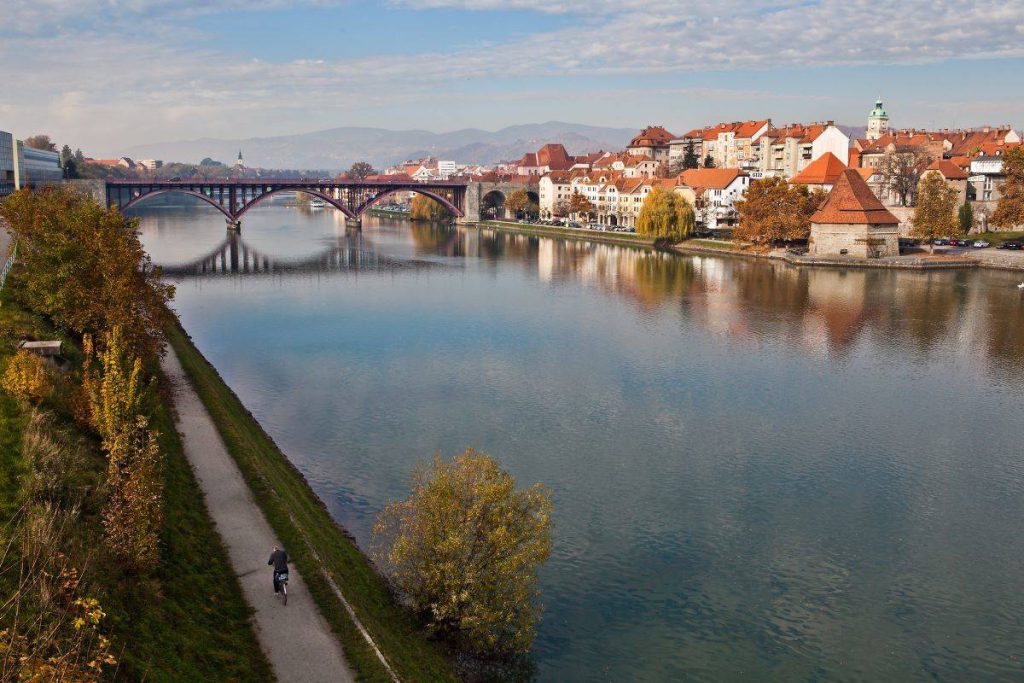
Some destinations win a ranking. Others earn it. Štajerska is the second kind. In February 2026, European Best Destinations placed this region in northeastern Slovenia 3rd among the 20 best destinations in Europe. On top of that, it beat Verona, Paris, Madeira and Lisbon, backed by more than 1.3 million international travellers. Only Madrid and Nicosia ranked higher. So, if it wasn’t already on your radar, now’s the time.

Why 2026 is the moment for Štajerska
European Best Destinations calls it a land of “urbanatural pleasure” — landscapes, culture, food and wine blending into something both refined and genuinely authentic. The region brings together seven areas: Maribor, Ptuj, Jeruzalem, Haloze, Slovenske Gorice, Ravno Polje and Pohorje. Also, 2026 brought individual recognition for two of its jewels. Maribor was named Best Wine Capital of Europe 2026. Meanwhile, Ptuj took the title of Best Cultural Heritage Town of Europe 2026.
That’s no accident. It’s the result of years of quiet work on sustainability and authenticity. In fact, it reflects a quality of everyday life that isn’t manufactured for tourists — it’s just how people live here.
What to see in Štajerska
Maribor and the world’s oldest vine
In the Lent district, right by the Drava, grows the Stara Trta: the world’s oldest living grapevine. It’s Guinness World Records-certified, at over 400 years old. However, it still yields 35 to 55 kilograms of grapes a year. That harvest becomes a wine that isn’t sold — it’s kept as a ceremonial gift from the city. On top of that, it has its own museum house, its own festival, and even its own anthem.
A short walk away, the old town hides century-old cellars carved beneath the city. Here you’ll find kilometres of tunnels and thousands of oak barrels. As a result, a tasting down here, among candlelight and centuries-old stone, is probably the best way to understand why Maribor is known as Slovenia’s wine capital.

Glavni trg, the main square, is the best spot to sit down and watch the city go by. There are terraces, market stalls and bikes everywhere. In short, it’s the unhurried pace of a regional capital that has nothing to prove.
Ptuj, Slovenia’s oldest town
Founded by the Romans as Poetovio, Ptuj still has cobbled streets and a medieval castle over the Drava. It also holds the title of Europe’s Best Cultural Heritage Town 2026. But its real treasure isn’t behind glass: it’s the Kurenti, sheepskin-clad, bell-ringing figures who walk door to door each winter to chase the cold away. Their door-to-door rounds have been on UNESCO’s Representative List of the Intangible Cultural Heritage of Humanity since 2017. In fact, Lonely Planet ranks the Kurentovanje carnival among the ten most fascinating in the world, alongside Venice and Rio.
Nature: Pohorje, the region’s green lungs

Just 10 minutes from central Maribor, the Pohorje massif begins. Here you’ll find forests, high-altitude peat bogs and more than 40km of hiking and biking trails. The circular cable car, running since 1957, climbs to 1,327 metres in around 10 minutes. That way, it covers a 714-metre elevation gain without a single car.
Around it, hillsides of Šipon (Furmint), Laški Rizling and Sauvignon Blanc form one of Central Europe’s most photogenic wine landscapes. Also, family estates and tasting terraces here are built for slowing down.
Food and wine: Štajerska’s identity
Here, wine isn’t a side note to the trip — it’s the main event. The Štajerska Wine Region Association brings local growers together with one shared goal. That is, putting this region on the world wine map without losing its human scale. Alongside the whites, reds like Modra Frankinja (Blaufränkisch) and Pinot Noir are showing up too. In fact, they appear more and more on Slovenian wine lists.
The Štajerska Wine Roads link family-run estates where you can eat, taste and often stay the night. This way, they follow a slow-travel model that avoids the crowded circuits found in other European wine regions.
Getting around with a lighter footprint

- The Maister is a small, free electric shuttle connecting key spots in Maribor’s historic centre.
- Also, Marprom, the city bus operator, is electrifying its fleet. Its target is 50% green vehicles by 2030, and it already runs fast-charging electric buses on its busiest lines.
- Meanwhile, mBajk, Maribor’s bike-share system, is the easiest way to get around the city and reach nearby wine routes.
- The whole region takes part in Slovenia Green, the country’s official sustainable tourism certification scheme, backed by the Global Sustainable Tourism Council. Specifically, Ptuj and Rogaška Slatina both already hold the Slovenia Green Destination label.
Where to stay
- Maribor centre / Lent: the most practical base to combine city life with the Stara Trta and historic cellars, all on foot.
- Ptuj: ideal if you want to wake up inside Slovenia’s oldest medieval old town, steps from the castle and river.
- Pohorje area: for travellers prioritising nature, hiking and real disconnection.
- Rogaška Slatina: the best base if your trip has a wellness and certified thermal-water component.
At this world to book we help you find certified accommodation aligned with your values. That way, you can also discover emerging destinations like this one with the same confidence.
Before you go: 5 practical tips
- Getting there: Maribor airport has limited flights. So, most travellers fly into Ljubljana or Graz (Austria) and continue by train or car.
- Best time to visit: spring and autumn for wine and hiking. On the other hand, February is your best bet if you want to catch Kurentovanje in Ptuj.
- Language: Slovenian is the official language, although English is widely spoken in tourism.
- Getting between towns: renting a car makes it far easier to link Maribor, Ptuj and the wine roads. That said, regional buses cover the main connections.
- Book ahead for Kurentovanje — accommodation in Ptuj sells out weeks in advance.
Štajerska isn’t chasing a trend
And that’s exactly its appeal. While other destinations fight overtourism, Štajerska has built its international recognition on authenticity and local cooperation. Also, on a genuine commitment to sustainability. As a result, the Slovenia Green labels held by Ptuj and Rogaška Slatina aren’t marketing — they’re proof that sustainability here is practised, not just claimed.
Over 1.3 million travellers have already put Štajerska on the map. The only question is whether you’ll get there before it stops being a secret.
Ready to experience Štajerska with a positive impact?
At this world to book you’ll find certified sustainable hotels and personalised guidance to discover this Slovenian region the way it deserves.
Published in Destinations · This World To Book — Certified sustainable travel agency · Travel good. Do good.